

How to Protect Your Boat from Sun: A Complete 2026 Guide
Table of Contents
- Why Sun Damage Is the Silent Killer of Your Boat's Finish
- How to Protect Boat Gelcoat from Sun Damage
- Marine Ceramic Coating vs Wax: Which Lasts Longer in the Sun?
- How to Protect Boat Upholstery from Sun Damage
- Best Boat Cover for Sun Protection: What to Look For
- Shade Systems and On-Water Sun Protection
- Seasonal Sun Protection Schedule for Your Boat
- Common Sun Damage Problems and How to Fix Them
- Frequently Asked Questions
Last Updated: October 12, 2026
Why Sun Damage Is the Silent Killer of Your Boat's Finish
Sun damage is the slow UV breakdown of gelcoat, vinyl, and canvas, and it starts long before you notice fading. Learning how to protect boat from sun means treating UV exposure as a year-round problem, not just a summer one.
UV rays break down gelcoat resin, causing chalky powder, dull color, and crazing, while drying vinyl and canvas until they crack.
- Clean and seal the exterior to block UV at the surface
- Cover the boat when it sits at the dock or on a trailer
- Add shade while you're underway
- Protect vinyl, canvas, and interior materials
How to Protect Boat Gelcoat from Sun Damage
The best way to protect boat gelcoat from sun is a protective layer that blocks UV before it reaches the surface. Wax and ceramic sealers both work, but last very different lengths of time.
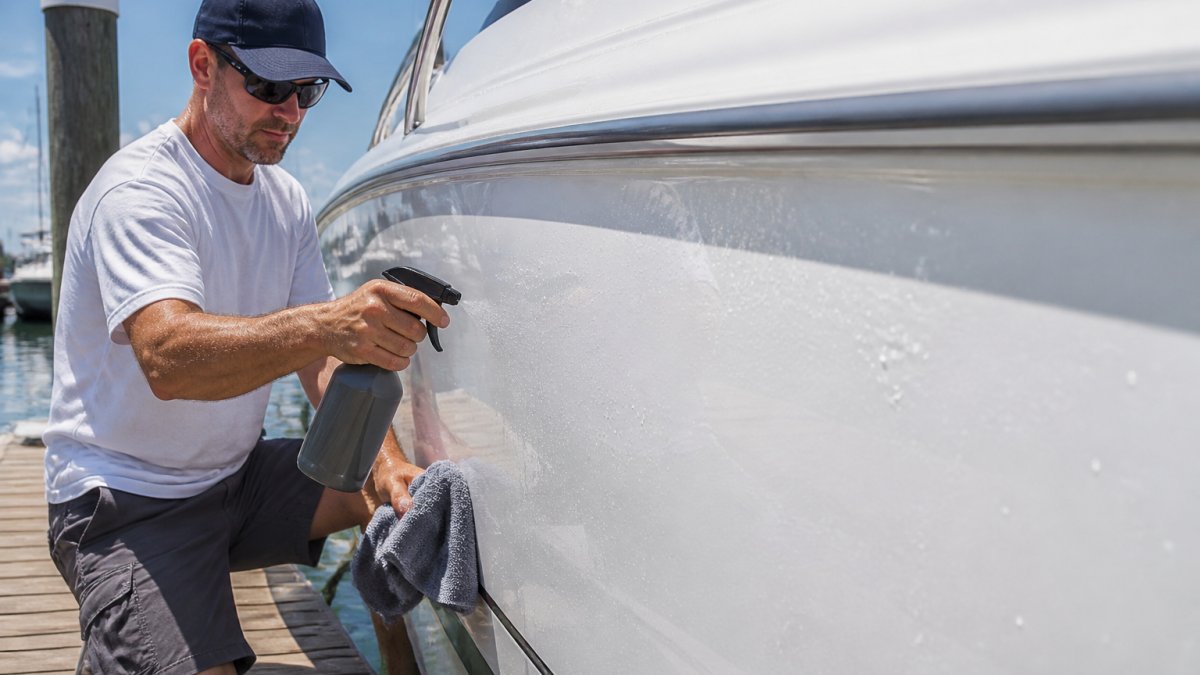
Gelcoat is the glossy outer layer of your hull. It takes the brunt of UV exposure.
Wash the boat first. A sealer over dirt just traps the grime underneath. guidance on UV and sun safety from the CDC is worth a read for the personal side of sun exposure, but the boat needs its own protection.
Wax vs. Ceramic Sealers: What Actually Blocks UV
Wax and ceramic sealers both block UV, but ceramic holds up far longer: wax breaks down under UV and heat in weeks, while a ceramic sealer stays intact for months.

Dock Candy Exterior is a high-gloss ceramic sealer you spray and wipe on. It removes light water spots and everyday grime while leaving a slick finish, and it's built for quick dockside touch-ups.
Marine Ceramic Coating vs Wax: Which Lasts Longer in the Sun?
Marine ceramic coating outlasts wax in the sun by a wide margin. Wax needs reapplication every few weeks; a ceramic sealer holds protection for months, meaning less work and steadier UV defense. Here is how the two compare:
| Factor | Wax | Ceramic Sealer |
|---|---|---|
| UV protection | Breaks down in weeks | Lasts months |
| Reapply frequency | Every 3-6 weeks | Every few months |
| Gloss level | Warm, soft shine | Sharp, high gloss |
| Salt and grime | Washes off easily | Slick, sheds water |
| Effort per use | Buffing required | Spray and wipe |
The trade-off: wax costs less up front but eats your weekends, while a ceramic sealer cuts reapplication frequency.
How to Protect Boat Upholstery from Sun Damage
The best way to protect boat upholstery from sun is shade plus a UV protectant formulated for the specific material. Vinyl, canvas, and marine fabric each react differently to UV, heat, and protectant chemicals, and the wrong product can accelerate the damage you're trying to prevent.
Upholstery takes more UV abuse than the hull in some ways: it sits in direct sun all day, gets no water to cool it, and flexes every time someone sits down, the flexing turns dry, UV-weakened vinyl into cracks.
Match the protectant to the material
This is the part most guides skip: a product that works on gelcoat can stain or dry out marine vinyl, and a vinyl protectant can leave canvas stiff and coatings uneven.
- Marine vinyl (seats, bolsters, coaming pads): Use a water-based vinyl protectant with UV inhibitors. Avoid petroleum-distillate or silicone-heavy dressings, which leave a greasy film, attract dirt, and cause stitching to wick moisture. Look for products labeled safe for marine vinyl and its stitching.
- Sunbrella and solution-dyed acrylic canvas (bimini tops, covers, enclosures): These fabrics have UV-resistant fibers, but the water-repellent finish still wears off. Use a fabric-specific UV and water-repellent treatment, not a vinyl protectant. Clean with mild soap first; bleach is acceptable on solution-dyed acrylic per most manufacturers, but never on vinyl or thread.
- Coated polyester and laminated fabrics (some boat covers, cockpit enclosures): These rely on a coating for UV and water resistance. Abrasive cleaners strip the coating. Use a mild cleaner and a UV protectant designed for coated fabrics.
- Marine-grade thread: Polyester thread holds up to UV far better than cotton or nylon. If your stitching is already chalky or fraying, no protectant will save it. Re-stitching before the panels separate is cheaper than replacing the whole cushion.
A simple upholstery routine that actually works
- Rinse salt and grime off vinyl and canvas after every trip. Salt crystals are abrasive and hold moisture against the surface.
- Clean with mild soap and water or a marine vinyl cleaner using a soft brush. Skip household all-purpose sprays, which strip protective finishes.
- Dry fully before applying protectant. Trapped moisture under a protectant is a mildew starter.
- Apply a thin, even coat of the correct protectant. Excess product attracts dust and leaves a sticky surface.
- Cover seats and cushions with a UV-rated cover when the boat sits, and store removable cushions below deck or indoors.
- Add shade over the seating area while underway. A bimini or extended sunshade cuts direct UV on the vinyl all day.
What to watch for
Vinyl that's already dry cracks faster once UV gets to work. If it feels stiff, looks chalky, or leaves residue on your hand, it's losing plasticizers, condition and cover it to extend its life. Once torn through, replacement is the only fix. Canvas tops need the same care: a faded, brittle top stops blocking UV for the people underneath and can tear at the seams under wind load.
Best Boat Cover for Sun Protection: What to Look For
The best boat cover for sun protection blocks UV, fits snugly, and breathes so moisture can escape.
Fit matters more than brand: a cover that flaps in the wind rubs gelcoat and lets UV in at the gaps.
Look for these features:
Dock Candy Exterior High Gloss Ceramic Sealer →
- UV-resistant fabric rated for marine use
- A snug fit with straps or a drawstring hem
- Breathable material to prevent trapped moisture
- Coverage for the hull, deck, and any exposed upholstery
For boats kept on a trailer or at a dock, a full cover is the single biggest UV win, blocking sun on every surface at once.
Shade Systems and On-Water Sun Protection
Shade systems protect you and your passengers while the boat is in use, when the cover is off and the sun is strongest. A bimini top, extended sunshade, or hardtop all cut direct UV over the seating area.
Shade also lowers heat buildup inside the boat, which is easier on vinyl, electronics, and anything stored below.
Pair shade with personal sun safety on the water:
- Broad-spectrum sunscreen with SPF 30 or higher, reapplied every two hours
- A wide-brimmed hat or cap to shade your face and neck
- Polarized sunglasses to cut glare and reflected UV off the water
- Long sleeves for long days on the water
Seasonal Sun Protection Schedule for Your Boat
A seasonal schedule keeps UV protection from slipping through the cracks. The work changes with the season, but the goal stays the same: keep a protective layer between your boat and the sun, and manage the heat and moisture that worsen UV damage. Most guides treat storage as an afterthought, but a boat sitting uncovered for months takes more cumulative UV than one used on weekends.
Spring
- Wash the boat to strip winter grime, old wax, and any mildew that formed under the cover.
- Inspect gelcoat for oxidation, chalkiness, and crazing before you seal. Sealing over oxidation locks in the dull look.
- Apply a ceramic sealer or marine wax to the hull and exterior surfaces. A ceramic sealer holds up longer through peak UV months.
- Check covers and canvas for cracks, fading, and failed stitching. Re-treat canvas with a UV and water-repellent product.
Summer
- Reapply sealer as needed through peak UV months. Spray-and-wipe ceramic products make mid-season touch-ups practical.
- Rinse salt and grime after every trip. Salt holds moisture against the surface and accelerates oxidation.
- Keep the cover on when the boat sits at the dock or on the trailer. A breathable cover blocks UV without trapping moisture.
- Use shade systems while underway. A bimini or extended sunshade cuts direct UV on passengers and the vinyl underneath.
Fall
- Do a full wash and seal before storage. This is the single most important prep step for a boat that will sit outside.
- Clean and dry all canvas, cushions, and removable upholstery. Any moisture stored with the boat becomes mildew.
- Store removable items below deck or indoors. Cushions, electronics, and safety gear last longer out of direct sun.
- Inspect the cover for fit and wear. A cover that flaps in the wind rubs gelcoat and lets UV in at the gaps.
Winter and long-term storage
This is where most sun damage quietly happens: a boat stored in the open sun all winter fades as fast as one used all summer, and the damage is harder to catch because you're not aboard.
- Cover the boat with a UV-resistant, breathable cover that fits snugly. A loose cover traps heat and moisture; a non-breathable one causes mildew and blistering.
- Leave ventilation paths open. Airflow under the cover keeps moisture from condensing on gelcoat and vinyl.
- Store the boat out of direct sun when possible. A shaded spot, a covered slip, or a garage slows UV damage dramatically.
- Check the cover monthly. Snow, rain, and wind can shift it, and a cover that pools water can stretch or tear.
Common Sun Damage Problems and How to Fix Them
Chalky, faded gelcoat: Oxidized gelcoat from UV exposure.
Cracked or brittle vinyl: Dry vinyl cracks under UV. Condition it and cover the seating.
Faded canvas top: UV breaks down the fabric and its color.
Hot interior: Heat buildup comes from direct sun on the deck and dark surfaces.
The pattern is the same across all of them: clean, protect, and cover.
Sun damage never stops, so your protection can't either. At Dock Candy, we built a two-step system for owners who want a professional-grade finish without a shelf full of products: Wash N Shine cuts through salt and grime, then Exterior ceramic sealer locks in a high-gloss protective finish that stands up to UV and salt.

Frequently Asked Questions
Does ceramic coating protect a boat from UV rays?
Yes. A marine ceramic sealer creates a sacrificial layer that absorbs and reflects UV radiation before it reaches your gelcoat, vinyl, or upholstery. Unlike wax, which breaks down in weeks under direct sun, a ceramic formula bonds to the surface and holds up through repeated UV exposure. Reapplication every 2-3 months keeps the protection consistent.
How often should I apply boat wax or ceramic protection?
If your boat sits in direct sunlight year-round, plan on reapplying protection regularly. The best boat cover for sun protection reduces how often you need to reapply by blocking UV when the boat is stored.
What is the best way to protect boat upholstery from the sun?
Cover vinyl and canvas when the boat is not in use. For exposed upholstery, apply a marine-grade UV protectant designed for vinyl. A bimini or extended sunshade cuts direct UV exposure while you are on the water. Rinsing and drying upholstery after each trip prevents salt and grime from trapping heat and accelerating UV breakdown.
Do I need to cover my boat when it rains?
A cover protects against more than rain. It blocks UV rays that fade gelcoat and crack vinyl. Even on cloudy days, UV exposure causes damage. A fitted cover also keeps leaves, bird droppings, and tree sap off the surface, which reduces how often you need to wash and wax.